Mental Post-Its

Thoughts, Notes, and General Mental Mayhem


1 Comment

The Cost of Chocolate

We’re coming up on Valentine’s Day, and no matter how you choose to spend it, the odds are that it will involve chocolate. USA Today reported that chocolate sales for Valentine’s Day 2009 totaled almost $15 billion. That’s pretty unbelievable. That’s a lot of chocolate.

But do you know how your chocolate gets made? Better yet, do you know who makes your chocolate? Where it comes from? If you are buying one of the popular brands or one of the cheap brands, then chances are great that slave labor is involved.

We take for granted all the options we have here in the US. You can splurge or you can pinch pennies, but either way, there is a choice for you. This choice is taken away from many of the people who pick the cocoa beans, and start the supply chain of what ultimately ends up in our bellies.

I don’t tell you this info to bring you down, or be a buzz kill, or ban chocolate. Believe me, I looooovvvveeee chocolate. In fact, I pretty much don’t care about any other kind of candy unless it has something to do with chocolate or peanut butter. And the more they marry, the better. But I do want to be a good citizen of the planet. I do want my choices to better the lives of others, not make them worse. And I can do that every time I make a purchase, and so can you.

I’m pretty impressed by the CNN Freedom Project. I love seeing them put their reputation and resources behind something so worthwhile. Their recent expose on the hidden costs of chocolate were not unfamiliar to me, but they did put a face with the issue. I’m going to do a better job of choosing chocolate, and hope you will consider it, too. Please buy chocolate that is labeled “fair trade” or carries certification by the Rainforest Alliance or Utz sustainability programs. You can also use apps like Free2Work or Fair Trade Finder.

I learned several years ago…no matter what the product is, if it’s really cheap, then the chances are that someone, somewhere is paying the price. You’re going to be a consumer, no doubt about it. Just be an educated one. I get the fact that most all of us live on a pretty strict budget. And I get the fair trade products typically cost more. But two things: first, if those were the items in demand then the price would go down, and second, now that I know better, I can’t choose to look the other way.

On February 14, you can show a lot of love just by choosing a better chocolate. Happy Valentine’s Day!

Leave a comment

Identifying Human Trafficking in Georgia

On Monday and Tuesday, I attended a seminar hosted by the Georgia Department of Education focused on human trafficking. I was thrilled to see the state taking an offensive role in this atrocity, and educating its teachers and administrators on the issue and prevention. They hope to have a poster in every school in the state with relevant information and hotline numbers by next fall as part of their “Not in Georgia” campaign.

One of the women who spoke to us was Maria Velikonja, arguably the foremost authority on human trafficking within the FBI. Most of what she shared with us was her experience throughout Eastern Europe, and how that related to what we are currently seeing here in the US and Georgia. Unfortunately, there is no complete profile for victims of human trafficking because it spans both genders, all socioeconomic classes, all sizes and shapes, various ages, etc. There are some factors, though, which do seem to be common for many cases:

  • Lower class homes
  • Female
  • Ages 9-18, or as high as early 20s
  • Single-parent homes
  • Homes where the parents pay little attention to the child
  • Substance problems
  • Ran away from home before
  • Girls with a series of older boyfriends
  • Low self-esteem
  • Illegal citizens
  • Good student with declining grades
  • Gang members or hang around gangs

These are by no means definitive, though. There are plenty of cases that have broken these molds. But the above mentioned characteristics can make a child more susceptible.

Maria also shared some of the findings from a 2005 report called “Hidden in Plain Sight” which make Georgia a breeding ground for this kind of activity.

  • In 2000, Georgia was ranked #1 in the US for percentage of childhood poverty.
  • Over 4,000 strippers work in Atlanta.
  • There are 440+ strip clubs in Atlanta.
  • A lot of illegal activity takes place at strip clubs, even legal ones.
  • 90% of runaway children in Atlanta become part of the sex industry.
  • Pimps come to Atlanta from elsewhere because of the city’s reputation.
  • Most predators make contact with pimps via the internet.
  • 45-50% of minors in Atlanta live in single parent households.
  • Once on the street, 1/3 of runaway teens will be lured or recruited into prostitution within 48 hours.
  • Atlanta ranks in the top five US cities for the highest levels of child trafficking.
  • Many children are recruited from public transit, malls, Underground Atlanta, schools, and even from their friends or schoolmates.

One of the most shocking statistics I’ve heard since I started learning about this issue a few years ago is that men who purchase sex with these children and teens are not who you’d think. In Atlanta, over 40% were men north of the Atlanta Perimeter. These are typically white, middle to upper class men. Shocking and sad. These are men we could very well know or associate with. Why? I believe it’s because they don’t like the story they are living in and are looking for escape. They want a dangerous break from their world. There are more than just desperate housewives out there.

What you can do:

  • Report ANY kind of suspicious activity.
  • Be informed and inform others.
  • Make your children aware of the situation.
  • Help your child’s school learn about the issue. A21 also has a student guide PDF.
  • Buy items made by trafficking victims worldwide to help offer them alternatives. Along with this, know where the products you buy come from. Example, most chocolate that we purchase in the US comes from slave labor. There is an app called Free2Work that you can download to help you navigate. Purchase power is one of the most important things you have at your disposal on any issue.
  • Ask questions.
  • Mentor or look out for children who could be at risk.
  • Mentor or look out for young boys who are at risk of growing up to be a perpetrator, trafficker or pimp.
  • Don’t ignore the issue. Crime thrives when it’s ignored.
  • Support an organization working to end human slavery. Examples, Not For Sale, Street Grace, WellSpring Living, A21 Campaign, DNA Foundation, Night Light, Hagar International, Better Way Imports, Freeset, Radiant Hope…and these are just a few.
  • Whatever you do, just DO SOMETHING.

SEEK JUSTICE.

Should you have any need to report anything suspicious regarding human trafficking, the national hotline conducted by Polaris is 888-373-7888.


Leave a comment

Human Trafficking Stats

I went to a screening of Nefarious, Merchant of Soles, a couple of weeks ago. It was a documentary on human trafficking, and was probably one of the best I’ve ever seen – if you can say that about the subject matter. You can take a peek at http://www.nefariousdocumentary.com.

While there, I received a couple of pieces with stats on human trafficking. They are a bit horrifying but I thought I’d share, because ignorance isn’t bliss and knowledge is power. Consider yourself educated after reading this, and then do something.

National and International:

  • 27 million people are enslaved around the world, which is more than the 9 million during the Trans-Atlantic Slavery period – Free the Slaves, Kevin Bales
  • Human trafficking (sexual, domestic, industrial and agricultural) is a 32 billion dollar per year industry, bringing in more revenue than the NFL, NBA, NHL and MLB combined. – United Nations
  • Human trafficking is the fastest-growing criminal industry around the world. – US Department of Health and Human Services
  • There are nearly two million children involved in the international commercial sex trade. – UNICEF
  • 161 countries out of 192 are involved in human trafficking. – United Nations
  • 80% of all trafficking victims are women and children who are forced into the commercial sex trade. – US Department of State
  • The average age of entry into commercial sex slavery int he US is 13. – US Department of Justice
  • Over 17,000 people are brought into the US each year for trafficking purposes. – US Department of State, Trafficking in Persons Report, June 2006
  • The average age of a girl entering prostitution in the US is 12 years of age. – Domestic Sex Trafficking of Minors
  • Her life expectancy after entering is just seven years. – Shared Hope International, “Demand: A Comparative Examination of Sex Tourism and Trafficking in Jamaica, Japan, The Netherlands and the US” Sharedhope.org, July 2007
  • The two other most common forms of slavery in America are domestic servitude and agricultural workers. – The Slave Next Door by Kevin Bales

Atlanta:

  • Atlanta is a major hub for human trafficking in our country.
  • 200-500 underage girls are raped for profit in our city each month. – Adolescent Girls in Georgia’s Sex Trade: Tracking Study Results, Atlanta, GA: The Shapiro Group 2011
  • 7200 menu purchase underage girls for sex each month in Atlanta. 42% of these men come from the upper north side outside the perimeter, 26% from inside the perimeter, 23% from the south metro area, and 9% from the vicinity of the airport. With approximately 3 million adult men in Georgia, 23% have purchase sex with females and 20,700 do so in any given month. – Georgia Demand Study, 2009 by the Shapiro Group, Atlanta, GA
  • 90% of the runaways wind up in prostitution. – Hidden in Plain View: The Commercial Sexual Exploitation of Girls in Atlanta, 2005

Local Organizations:

  • Not For Sale Georgia (www.facebook.com/NotForSaleGA)
  • Out of Darkness (www.outofdarkness.com)
  • Wellspring Living (www.wellspringliving.org)
  • Street Grace (www.streetgrace.org)
  • Meet Justice (www.meetjustice.org)
  • International Justice Mission (www.ijm.org)


Leave a comment

Sponsoring Hope

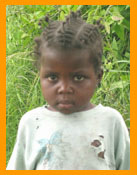
I did something last Sunday night that I’ve wanted to do for several years now…sponsor a child through World Vision (www.worldvision.com). Take a look at Claudine’s adorable, little face. It’s just about the sweetest thing I’ve ever seen. Yep, I’m already in love.

Just a little about her…
Claudine is from the Democratic Republic of Congo, former Zaire. She just turned five a couple of weeks ago. She lives with her mother and one sister. Her mother works in the agriculture industry. She loves to play with dolls and she runs errands for her family as her primary chore. Her health is satisfactory.

Reading those stats, you wouldn’t really understand the reason I chose her from all the other precious faces. But if you aren’t too familiar with the DCR, and I wasn’t until Sunday, it’s a worn-torn country that sits in Central Africa. It’s the third largest country on the continent. The average annual income for a family is $120, one of the lowest in the world. Less than half of the population have access to clean, safe drinking water. This issue alone can cause 80% of the world’s diseases. Also, less than half of the children are in school. But the children may be more preoccupied with whether or not they will be recruited as a soldier or slave, so survival trumps education. Over the last few decades, there were two civil wars, referred to as the Africa World War, in which over 5.4 million people were killed. Poverty is severe here, as is malnutrition. The AIDS/HIV epidemic has also infiltrated the country, and Claudine’s family lives in an infected area.

I also knew I wanted to sponsor a little girl because I have been given so many advantages here in the US, and there are so many girls and women who are at a major disadvantage because they are female. So I wanted to help create opportunities as others did for me. A study conducted by the United Nations concluded that women’s rights and fair treatment was not a priority in the DCR and in fact, women were treated extremely poorly in some circumstance. There is even the existence of “female circumcision” which is more of a mutilation to these young girls. Girls and women are frequently bought, sold and traded for work or sex.

And that’s a little about the country…

It’s so difficult to read those things from the comfort of my living room, laying on my couch, in the air conditioning, with quick access to cable/internet and a refrigerator. I don’t really look at that and feel bad for the things I have, because I have more than just things. I have a responsibility. I desire to see the life of others improve because of God working in and through me. I desperately want change. And I have hope that it can…but I can’t do it alone.

I really wish I could just jump on a plane tomorrow and see Claudine in person. Hug her and give her presents. Let her know someone else cares for her and is praying for her. And maybe one day that will happen. But for now, some of the luxuries I’ve been given will be used to help her and her family. It may sound silly, but I did finally find one of those great things that you can put a price tag on – HOPE. For $35 each month, I am sponsoring HOPE for Claudine. Because of me, she can go to school, have access to clean water, give money to her family, buy food, wear suitable clothes and yes, have a future. Some of these things may have only been dreams over a week ago. I am honored and overwhelmed to be a part of this process. I know it’s a process I chose, or maybe I didn’t, but it is so exciting to know that one person’s life could be drastically changed because I wrote a check once every thirty days. It was easy for me, but course-altering for her. And it connected me to this tiny, little soul a million miles away that will also change me. I instantly felt love, gratitude, protective, stewardship and so many other things the moment I submitted my sponsorship. So maybe I also gave myself a little hope; hope that in all the pain and suffering and injustice in the world, I have made it better. And the best part, you can, too.

If this touched your heart in some way, I’d ask you to take a look around http://www.worldvision.com. I think they have a lot of amazing things going on. And if you don’t have $35 each month, they have down to $20 to help end human trafficking and even smaller gifts like purchasing chickens for farms. So, whatever you can do, it’s enough. Small amounts add up. Cutting out one coffee a week or one lunch a month or whatever you decide, it all matters. But how can we, as educated Americans know about an injustice like this and do nothing?

You can no longer claim ignorance. You can only claim action. Find a path, whatever works best with your gifts and strengths, and walk in it. Sponsor some hope.