I’m sure I’ve mentioned more than once that I do not enjoy to read. However, I feel like it’s important and I do like to keep learning, so here we are. If only they’d make more movies about books! 😉
Here are the books I read and listened to over this past year. I mostly listen now since I have a long commute, and can get through books easier (faster) that way. It’s hard for me to sit and read at home; there are just too many good movies and TV shows, which I’d always prefer. But here you have it—my list for 2012. I was hoping it’d be a little longer, but I was home sick a lot this year and therefore didn’t listen to all the books I wanted to. So I’ll have some catching up to do next year.
This post was updated on September 14, 2013. For the updated post, please click here.
____________________________________
I wanted to let you all in on a secret that should be shared with the world: biofeedback. I went to have this done for the second time in my life this past Friday. The first time I did it was about a year and a half ago to fix my gluten sensitivity (it worked, by the way). This time I went because of all my health issues the past few months. (Five+ months of mono, kidney infection and gallbladder removal. It’s been a rough six months.)
Anyway, I would love for those of you who have any kind of health issues (or simply are interested) to consider going. I plan to start going every year like a physical. After reading, you’ll probably think it sounds like magic, or too good to be true, but of course, I’ve seen it work on myself–twice. Here’s the link to the page of the place I go: www.atlantamedicalinstitute.com/Stress-Reduction/biofeedback.html with their contact info.
(If you don’t live here, you can find biofeedback all over the country but they may each work a little differently.)
Here are some of the things I’ve already asked about with a few of you guys in mind:
Gallstones
Kidney stones
Eczema
Food allergies
Indoor/outdoor allergies
Stroke
Autism
Depression and mood disorders
The process:
Sit in a recliner for two hours and then get a foot bath. While sitting in the recliner, she puts sensors on your wrists, forehead and ankles. These measure the electrical flow of energy in your body and look for problems. While monitoring on a computer screen, she looks for both emotional and physical issues. This part is about an hour. The second hour she uses the biofeedback to help correct the energy blockages in your body. You can barely feel it. Then, the last part is the ionic foot bath which pulls toxins out of your body through your feet. The water turns different colors depending on what its pulling out. It’s crazy. (I even saw parasites in my water this time–yuck!)She always sees more than I ever tell her. She can see what emotions your struggling with as well as foods, environmental stressors and physical issues. I had told her about the mono, kidney infection and gallbladder. She also asked if I’d been having lower back pain and sleeping issues–both true. She could see how shot my immune system was, vitamin/mineral deficiencies and major lack of energy. And unlike my regular doc, she could explain why I had headaches when the weather changed for the past year or so. (Turns out it was when my gallbladder had become swollen and sensitive to humidity, and that was the result. Since I’ve had the surgery, I haven’t had the weather headaches!)
The cost:
The long process I’ve done twice (outlined above) is $250. If you have to do follow-up sessions they are usually the one-hour sessions at $100, I believe. And then, depending on what she finds, you’ll have nutritional supplements as well. I took home six things supplements last time and it cost around $120, I think. I’ll have to do some follow-ups to get my immune system back online since it was completely shot, and there will be more supplements to complement the biofeedback each time. Usually the rounds of supplements are about 30-60 days, from my experience.
The day before I saw her, one of her clients had been working with Blue Cross Blue Shield for over a year trying to get it covered by insurance. It finally happened! She said if your primary doc would write the prescription, you could get it covered by your insurance provider–terrific news! I’m going to contact my doc soon.
I know it sounds expensive, and maybe time consuming, and it is, for those of us without a lot of extra funds or who can’t get insurance to cover it. However, I would’ve rather done this six months ago than having mono for so long and my gallbladder removed. Several hundred could’ve saved several thousand. Now, unfortunately, I’m doing both. And also I’d rather be on supplements for a while then all kinds of Rx meds, short or long-term. She told me she could’ve fixed my gallbladder issues and I wouldn’t have had to have it removed. I could kick myself because I truly believe her.I really do think this would benefit so many people. I can’t understand why more people don’t know about it! She had an answer for everything I threw at her. I know the process sounds a little crazy, though. I’d be skeptical if it hadn’t worked for me twice. I just saw her on Friday and have already had noticeable improvement in energy and sleeping. For those of you who are not into the homeopathic thing, I’d encourage you give this a try if what you are doing now isn’t working or is only managing your issue and not curing.
The lady who does my biofeedback here locally has some really remarkable/amazing/unbelievable stories of how biofeedback can help others, both personally and first-hand as well as stories she’s heard. I named all kinds of afflictions and she had a biofeedback answer or story for them all.Quick story:
She did biofeedback on her brother, even though he was resistant. His heart area showed a lot of issues during her session, and she told him he need to go to a specialist right away. He told her he was feeling fine and put it off. She bugged him and he finally went to his general doc, who said he was fine. She kept telling him to see a specialist. So, he finally did, and was admitted to the hospital right away with a 95% heart blockage! He was a heart attack waiting to happen! She has all kinds of cool stories like that.
And it is safe for children for those of you who wondered. She is currently doing biofeedback on her two month old grandson because he gets frequent earaches.
ALSO, if you live here and would like to go in the next couple weeks, I got an email I can forward you for 20% off during October. It doesn’t say new customers can’t use it.
Let me know if you have any questions. I’ll answer anything I can, but I am a huge believer as you can tell.By the way, they also have a really good vanilla-flavored pea protein shake mix (that’s gluten free) if you like to make protein shakes. It definitely dilutes the taste of the supplements! 😉
Like me, my friend Sara will be soon be walking around without a gallbladder. Since I just had mine removed three weeks ago, I decided to write down a few things for her. She thought I might share my knowledge on cholecystectomy (the surgery) with the world, so here it is. Hopefully it’s helpful to those of you out there who may join our little club in the future. Mine was removed in an emergency situation, so I didn’t have a lot of time to prepare, mentally or otherwise. For those of you who have some time to digest the information (pun intended), you might feel more equipped going into it now.
They kept me one night after my surgery because I live alone. They needed to make sure I could get around on my own. If you live with others, you’ll probably get to go home that day, if your surgery is early enough. Big plus, in my opinion.
You have to go to the pharmacy right after leaving the hospital, unless you can get someone to grab your Rx for you. It’s not a great time to run errands, and I personally think it’s ridiculous. I thought I was going to pass out by the time I was home! You’ll need the pain meds right away probably. If you can get your pharmacy to allow someone to pick it up, do it. Maybe there’s a form to sign or something. But you’ll just want to go straight home.
They gave me pills for nausea at home. I think maybe for the first three or four days I had to take maybe one a day. But it wasn’t bad or anything. If you like ginger, maybe have some ginger tea, ginger chews or ginger-ale ready at home if those will help. But the pills do work great too.
I had some blood in my urine for about two days following the surgery. That seems to be normal.
Very important: You can take a shower about 24 hours after the surgery. Just be careful not to get the bandages wet, so keep your back to the water stream. Which reminds me, move everything within reach. Stretching will be off limits for a while. So, move all your shower stuff to the back of the shower. I even had to move my nightstand closer since I typically reach for my lamp at night.
They say it helps to get up and move around as you are able. So I did laundry, emptied the dishwasher, got food or drink, etc, and found ways to be upright and walking. Being upright isn’t very painful.
I am not sure if it’s everyone, but my worst immediate pain for two days was my right shoulder. I think it’s how they have to position it during surgery, but it felt like they dislocated it. And the Percocet did nothing for the arm pain. In the hospital they said they couldn’t do anything for it, but once I got home I used Icy Hot patches and they helped a lot. Just have something available in case you need it. The main issue is that I’m right-handed, so I couldn’t use it to help prop myself up. I just had to force my abs to do the work, which is what can be so painful (see previous blog post link). But if you have people at home, they can probably help you sit/get up.
Again, not sure if it’s everyone, but they put me under via IV, but kept me under through a throat tube. So when I woke up, my throat hurt for a couple of days. Have soft foods around. I also like these throat drops.
I barely had any appetite for a week or more, so maybe have foods around that are comforting and you feel like eating. For me it was soft bread with cheese, bananas, apple sauce, etc. I wish my appetite hadn’t come back—that was actually a perk! 😉 I made chicken and rice thinking it would be plain enough, but the smell made me nauseous (anything with a strong, lingering smell probably) so I didn’t eat it for a week or so. But I also have a sensitive nose.
They’ll tell you to eat low sodium. I’ve discovered I kinda eat that way anyway, so I really haven’t had to adjust. And the ONLY thing I craved was Pad Thai, for some strange reason. It’s not low sodium or low fat (the things your gallbladder used to absorb which now happens via liver/stomach), but I ate such small portions each meal that I didn’t have any issues. Many people evidently have diarrhea with the adjustments to their systems, but I’ve not had any issues. Just have some meds on-hand, if needed.
My Percocet was only good for about five days. About day three or so, I started spacing out the meds so they’d last longer. But do this only once you can take it. These were supposed to be every six hours, but in the beginning, you feel like you need them every three. So don’t do space them out or drop them until you feel you can. Then switch to Ibuprofen. I was kinda surprised that helped, but it did.
I couldn’t lay on the couch for almost two weeks, too low and hard to get up. After a few days, I could sit on it with pillows behind me because it isn’t hard to rise vertically, only horizontally. (So, going to the bathroom wasn’t bad either because it’s vertical.) Then I’d just remove pillows as I could and eventually be able to lay down. So, my bed is high, and I had pillows to help me stay propped up and get out of bed easier. If I’d have known about it at the time, I would’ve ordered a pillow like this or this.)Anything you can do to avoid being horizontal is good! (I stayed propped up for multiple nights because I typically sleep on my stomach and didn’t want to roll over in my sleep. I just watched TV in bed on my iPad. And, of course, slept a lot.
I would say I had pain for almost a week, and then it was more soreness, except when I had to use my ab muscles. I didn’t watch comedies or medical dramas. 😉 I made sure to keep taking allergy meds, too, because sneezing and coughing isn’t fun.
I could drive about a week later, and when I went back to the doc to get the staples out, I was surprised it didn’t hurt. But I didn’t realize they used staples at first. About a week after surgery, I looked under the badges, and wish I hadn’t! I tried to immediately stick it back on but it didn’t work—I looked like Frankenstein with all the bruising and staples. And then I was nervous about getting them out since I’d never had them. But giving blood was more painful than getting them removed. Finally, a nice surprise.
After the staples, they had me keep gauze bandages on the different incisions (three—don’t need at belly button) which you change 1-2 times per day. (I had to buy some, so grab ahead if you can.) I had to wear the main bandage for about a week after. And I kept my back to the shower water stream until my bandages were ready to stay off completely. It just seemed like the water pressure would hurt otherwise, but that was a feeling more than a fact. Do what feels comfortable to you! They told me to leave the little clear Band-aid type things on until they fell off—they’re under the gauze. Two have fallen off now, and it’s about three weeks since the surgery. The main ones should come off in the next couple days, I think.
Probably because I have mono as well, but I’m still pretty zapped of energy/tired. A week and a half later I went to work for a few hours on Monday and Tuesday and ran some errands—big mistake. Knocked me on my butt for about three days. So, start small and build. And I hadn’t worn jeans since before the hospital either, so those didn’t feel great at my belly button. And any regular clothes in general. I felt really swollen for several days all over, and a few days later still around my abdomen. But I was on an IV for three days due to this emergency surgery, a kidney infection and waiting to have surgery. Hopefully you won’t be the same. Nonetheless, lounge clothes are your friend. (As sick as I’ve been this year I should have my own line of lounge wear.)
I’d say I still have some discomfort from time-to-time around the abdomen but not too bad or too long.
That’s it! I hope this process will be easier for you now!
PS: If you go to the ER with an unknown pain on the upper right side of your abdomen, just do yourself a favor and pack a bag to take with you! Once I was there, I wasn’t allowed to leave.
I’ve said it before, and I’ll say it again–I don’t enjoy reading. However, I try to always be reading at least one book at any given time. I do like to learn, and therefore, I feel reading is important. It expands my mental horizons. And I do come across some good, or even great, books. It just remains a fact that I don’t enjoy it overall. I’d rather be watching TV or a movie. There are these little gems, though, that really stick out in my literature landscape. And, even if for a brief moment, I do derive great pleasure from the words. Mudhouse Sabbath is one of those occasions worth marking.
I gulped this book up. In fact, I read several of the chapters twice just to prolong my experience. It’s just too short! I’ve been wanting to read it for a couple of years now, but just got around to it. I guess I was in the mood. And I quickly discovered an author that I love as well. I feel she, Lauren F. Winner, writes much the way I do because it’s what I’d like to read…as if someone is talking with you. Not lecturing you, not talking at you, but talking with you.
The one thing that initially drew me to this book was that Lauren had converted from Judaism to Christianity, and was learning to integrate the former into the latter. I’ve been fascinated with Judaism for a number of years now, and have been learning in bits and pieces. It’s the Old Testament, and the root of Christianity, so I wanted to understand better where my faith came from. I think too often Christians don’t consider it at all. But when you have a greater understanding of it, you better understand the Bible as a whole. It provides context, and gives foundation. As she puts it, “practice is to Judaism what belief is to Christianity…spiritual practices don’t justify us. They don’t save us. Rather, they refine our Christianity; they make the inheritance Christ gives us on the Cross more fully our own.”
Sabbath – stressed the need for rest as a regular part of living. It is a place to draw the energy to work from, not working until you crash and are forced to rest. “In observing the Sabbath, one is both giving a gift to God and imitating Him.” For the last five plus years, I’ve observed a Sabbath off and on. I haven’t really gotten good at it yet, but I’m trying. Even if it’s just a half day, a few hours that I regularly plan for, I know it will have enormous impact.
Food – taught me to have a greater respect for the things that I eat. It’s not simply entertainment or a mean’s to an end, it’s a source. “A right relationship with food points us toward Him.” Lauren mentions another author named Barbara Kingslover in this chapter, and how Barbara has shown her to eat seasonally, which “sacralizes not just food, but time.” I’ve been reading Animal, Vegetable, Miracle by Barbara the last couple weeks. Head’s up, there will be a blog post about it. It’s been incredible!
Mourning – showed me that we as Americans don’t know how to grieve well. Like everything else, we tend to rush through it. “Judaism understands mourning as a discipline, one in which the mourner is not only allowed, but expected to be engaged.” And one of the Jewish mourner’s prayers focuses solely on praise, thereby reminding us that God is still present. He has not left you alone. It pushes you to take the time to feel the sad emotions, work through them wholly, and sit with the knowledge that however lost or lonely you feel, He is by your side.
Hospitality – called me to keep inviting others into my life. “Creation is the ultimate expression of God’s hospitality to His creatures…Our Three-in-One God has welcomed us into Himself and invited us to participate in divine life. And so the invitation that we as Christians extend to one another is not simply an invitation into our homes or to our tables; what we ask of other people is that they enter into our lives.” I used to be really good at inviting people over, but I’ve gotten away from that. Time to make some changes.
Prayer – gave me a different perspective on liturgy. I’ve always had a hard time with liturgy because it never felt real to me. It was just me praying/reciting what someone else wrote down. There wasn’t any emotion, which I depend greatly on. “When you don’t have to think all the time about what words you are going to say next, you are free to fully enter into the act of praying; you are free to participate in the life of God…Liturgy is not, in the end, open to our emotional whims. It repoints the person praying, taking him somewhere else.” I suppose my views on liturgy is one of the reasons I have trouble getting through the Psalms. But the next time I delve into them, I hope I’ll look at them differently.
Body – hit home. “Though I believe God has something to say about human bodies, I generally tune out God and listen to Cosmopolitan instead…Scripture speaks of bodies that God created in His image, bodies that are both doing redemptive work and being redeemed.” That is a re-framing that I needed. It helps me remember the first and foremost reason I need to take care of my body.
Fasting – gave me further fuel to practice this act more. “Fasting is at its core about repentance…When I am sated, it is easy to feel independent. When I am hungry, it is possible to remember where my dependence lies…Fasting is not meant to drag us down, but to still us. ” Matthew tells us “when” you pray, give and fast. It’s not an option. Again, something else I’ve done kind of off and on but never developed a good habit for it. I am fairly good about fasting for major decisions and during Lent, but need to strive to make it more regular.
Aging – addressed both yourself and those in your circles growing older. “The spirituality of aging inevitably involves preparing for one’s death…Caring for one’s elderly is an obligation…It is not always fun, but it is always sanctifying…When our memories fail, it is our community that can tell us who we are.” A very interesting way to look at the aging process. She also references a rabbi who notes that to elder is to shape the last years of your life with intention. I like this notion, but I’d rather start now.
Candle-lighting – gave me new insight on something I really didn’t understand. Candles mark occasions and mark time. “There seems to be no surer way to sacralize time or space than lighting a candle, no quieter than the silence of candlelight. Candles are peaceful, and transfixing, and ancient.” She gave me some great ways to use candles for more than just making things brighter or smell better.
Weddings – allowed me to see marriage as a “community endeavor.” It’s not just two people making a commitment, but granting witnesses to the union the opportunity and permission to be a part of it. Learning from one another and doing life together in community brings out the best in each of us. It gives greater power to two becoming one.
Doorposts – helped me pull my mezuzah out of my drawer. A friend brought it to me from his trip to Israel, and it sat on a shelf. Then I redecorated my bedroom and it went in a drawer. Now it sits beside my door since I’m in an apartment and can’t really affix or tape it permanently. The mezuzah is derived from Deuteronomy where the Lord says to bind the words on the doorposts of your houses. It is a promise of peace. Lauren also describes a sign on a door that she found which had the verse Psalm 121, “The Lord shall preserve they going out and they coming in from this time forth, and even for evermore.” I liked that representation a lot as well. “Every time I come home I see the sign, and I remember that I claim to actually believe in this God who will preserve my going out and coming in, and I remember that this home is supposed to be a Christian home. It is to be a home into which I invite strangers, and in which I organize my time through prayers, and in which I do work that might somehow infinitesimally advance the kingdom of God.”
Ah, just writing about it makes me want to read it again! I haven’t done that yet, and I am absolutely sure that I will. I learned so much, and have already starting changing my thoughts and behaviors based on what was said. It hit the spot; so much of what I wanted it to be and more. I think Mudhouse Sabbath will remain one of my all-time favorites, as well as a book I recommend to many people. If it remotely sounds like something that would interest you, I’d urge you to pick it up. I can’t imagine you’d regret it.
By the way, if you’re wondering, Mudhouse is the name of the coffee shop where Laurn wrote the book. And, yes, she spent her Sabbaths there, writing and reading.
This past week, I was in Dallas for the Echo Conference. It’s for artists, geeks, and storytellers in the church, and was my first time attending. It was pretty cool, and quite different from my usual conference experience. I tried to take good notes for you and me both, and while it would be a pretty long post if I included each and every note here, I will include some of the highlights.
Here are a few of the gems I appreciated most:
Cole NeSmith: Creativity Overcoming Safety
“The Artist as Prophet” –A prophet is someone revealing the truth of God. In life and the church, we become subservient to someone else’s agenda, but God has given us our own unique things to say in a way that no one else can. God is revealing his manifold wisdom through the church. (Eph 3:10-11) There is still plenty for us to say.
Creatives can sometimes see what others can’t. A Radio Lab podcast by NPR explained that the original Hebrew Bible and Homer, as well as other popular ancient texts, do not use the color blue. They do, however, use most other primary colors. So a tribe in Namibia was studied who only had five names for colors. When shown a color outside their only five, they couldn’t see it. Artists often can’t see what we don’t have words for.
Artists have prophetic permission. We are expecting and ok with artists making us uncomfortable. Artists must respect authority, but are not subservient. The artist is a risk-taker who goes into new territory first to illuminate it. In fact, a Barna Study found that people were leaving the church because it is too safe!
Success is related, not to outcome, but to obedience. Our willingness makes it a success.
The Amnesia Project: Marlon Hall
Dream. Believe. Do.
The heart of imagination is memory. Go backward to go forward. How can we imagine our future if we don’t know who we are? As amnesiacs, we must wake up from amnesia to remember the past so we can effectively shape the future.
We tend to focus on what, who, where and how but not enough on why. Why is the source. Your heart is attacked when you don’t remember the why.
We don’t see things as they are. We see them as we are. Perspective.
Assess your failure. Use the crap of your past to fertilize your future. You must fail in order to succeed well.
Keynote 1: Todd Wagner
Don’t look at someone’s success as your failure. It’s probably meant to bless you, so don’t take that opportunity for blessing away. God knew what He was doing when He made you. Be inspired and encouraged by those you see as great.
Col 1:25 – God put Christ in us to reveal His glory. God has entrusted His glory and reputation in the form of us. He stakes His reputation as a Creator in us. We are fearfully and wonderfully made and remade daily. Our lives are meant to point to Christ and have others want to do the same.
Two people can tell you the truth about yourself: an enemy who has lost his temper, or a friend that loves you dearly.
The logo of the NBA is a real guy, not just a graphic or model. We are God’s logos that represent Him to the world. What would happen if someone pulled back the curtain of your life? (Wizard of Oz)
Keynote 2: Todd Henry
Author of “Accidental Creative”
Is it possible to be prolific, brilliant and healthy? Probably two, but rarely all three if at all. We usually end up fried. We can become unreliable because we can’t keep up the pace. We can become fired if we don’t constantly do great work. How are you doing on these? If you are missing one, it’s usually the healthy piece.
Sometimes we don’t see the pressure because it’s been there for so long. The moment we have a great idea, the stakes are raised.
We are in a create-on-demand world. The creative process is the perpetual assault on the beachhead of apathy.
Five Steps: Define the problem. Explore the options. Choose the best option(s). Execute. Rinse and repeat.
Are our ideas to appropriate (safe or close to us)?
Creativity is rhythmic.
Focus – Sometimes we think something out there is more important than what’s right in front of us. (Twitter, email, etc.) We think nothing of giving away our life 10 seconds at a time, but it adds up!
Define Challenges – ask multiple questions.
Relationships allow us to pursue meaningful things. Seek relationships that challenge you. Seek out people who inspire you. Seek mentors who help you define priorities and problems.
Energy – Mange it effectively to be your best. Prune regularly. It may be good, but not right at the time. Think whole life, not compartments. Get good at sitting down and evaluation.
Hours – Where you put your time can determine your success. Dedicate time to generate ideas for the things you love. Your priorities are with your calendar and checkbook.
Live Creatively: Amena Brown
Live creatively, friends…Make a careful exploration of who you are and the work you have been given, and then sink yourself into that. Don’t be impressed with yourself. Don’t compare yourself with others. Each of you must take responsibility for doing the creative best you can with your own life. – Paul (Gal 6:1,4-5, Message)
Artists need a place of prayer. Jesus climbed the mountain so he could be by himself and pray. He stayed there alone, late into the night. (Matt 14:22)
Artists need a place to be creative. In order to be creative you have to know how to prepare to be creative. – Twyla Tharp. It may be your house or outside of it. Be consistent. Do your work.
Artists need a place to be transparent. Make this your common practice. Confess your sins to each other and pray for each other so that you can live together whole and healed. (James 5:16) Be accountable to someone. Don’t surround yourself just with people who are impressed by you.
Artists need a place to connect with other artists. Be around people who are better than you to inspire you to be better.
Artists need a place to cultivate your craft. Who am I to think I can build a house adequate for God—burning incense to him is all about I’m good for! I need your help. Send me a master artisan…” – Solomon (2 Chron 2:6-7, Message. Getter better. Offer the best you have.
Artists need a place to connect with your local art scene. Go out into the world uncorrupted, a breath of fresh air in this squalid and polluted society. Provide people with a glimpse of good living and of the living God. Carry the light-giving Message into the night. – Paul (Phil 2:14-16, Message).
Some thoughts on becoming a full-time artist: Completely surrender. Ask God what he wants to do with the gifts he’s given you. Be willing to scrub toilets. They are a means to an end. Remember you are serving God above all else. Study the artists who come before you. Push the art forward. Let them be your mentors. To be a full-time artist is to be an entrepreneur. If you don’t want to think about the biz side, keep it a hobby. Make the most of your day job. Save money. Decrease expenses. Live on less. Be yourself. Be who God called you to be.
Establishing some sort of routine helps you get through the hard mental days. Also expose yourself to new things to keep you inspired and creative.
Good Idea, Now What: Charles Lee
What do our ideas have to do with the real world? Ideas are a stewardship.
We will work extra hard if we think our idea is valuable enough.
Who are you, and who/what are you leading? Mission statements don’t cover these questions well, but they are crucial to understand. What do you bring to the table? Create a remarkable experience that people care about. Some of the best ideas come from those you serve. Consider the end user. Put yourself in the shoes of the person you hope to benefit.
A study found that those who talk about their ideas and share them too quickly without writing them down and processing them will rarely pursue or accomplish them. Write them down process them. This task also allows you to plug others in faster when you’ve thought through the details and then share with others.
Creativity and idea-making: Perseverance brings things to life. Ideas must be nurtured. Separate ideas may even come together over time.
Think options first. Malcolm Gladwell’s “Speghetti Sauce” TED talk…there may not be a “best” way to get there. People respond to options.
Simplicity and clarity. Take the concepts and prune them. People will connect to your core competency.
Ideas create tension. This is a good thing.
What are you waiting for?
Gaining Influence and Mobilizing Others for Good: Lindsay Nobles
Influence: to be a compelling force on something. Influence is more important than authority in today’s world.
In gaining influence, you need to be yourself and be authentic. Find your passion, and be a part of the story.
Don’t let fear squelch your visions. Enlist others. Surround yourself with people who affirm and hold you accountable. Your online persona should match who you are. Be generous and kind. Give your time and resources away the way someone else did for you when you were starting out.
Don’t talk about yourself all the time. (80% others, 20% yourself)
There are three ways to pull people into a story. Logical appeals to their head. Emotional tells a story to compel their emotions. Cooperative draws parallels between people and situations
How do you leverage influence? Focus on the people you naturally have influence with first. Deepen those connections. Let the broad come later. Let people see your flaws. Learn more about the things you love.
Sometimes its not about getting answers, but more about formulating the right kinds of questions.
Keynote 3: Tony Hale
You have to have a support system. He started The Haven in NYC as a Christian support system.
Entertainment is a constant faith walk. You don’t know when/where your next job is coming. It’s awesome to know God has your back.
His favorite movie is Lars and The Real Girl because it shows our desperation for connection.
We can’t put Christian art in a box. It can be outside a Christian bookstore.
If you are judging something or someone, ask yourself if those qualities also live in you. The answer is probably yes, so don’t judge too harshly.
Character development can be a study of empathy.
If you aren’t practicing contentment where you’re at, you’ll never be content when you get what you want. Contentment is a discipline. Practice it daily. When discontentment comes, tell it “not now.”
If you don’t surround yourself with people you really know you, you’ll lose yourself when the people who only know and love your work are the only ones around. It becomes your identity.
If I say yes to something I’m not comfortable with, they won’t get 100% of me. I’m doing them a favor saying no.
Don’t put up a wall—collaborate.
Keynote 4: Scott Williams
We are all storytellers.
Unity can be expressed through diversity. Gal 3:28 – neither Jew nor Greek, slave nor free, male nor female, for you are all one in Christ Jesus.
Live the Great Commandment. Matt 22:7-9. Love the Lord God with all your heart, soul, mind and strength. Love your neighbor as yourself.
John 4:27-30 – Woman at the Well. Why aren’t we more like the woman—going out telling everyone we meet about our life-changing experience with Jesus? Many believed because of what she said, and then went to hear Him themselves.
What stories are you telling? We all have a powerful story to tell!
Diversity matters to Coca-Cola and they are just selling sugar water. We have the Living Water. Diversity should matter.
Do the Great Commission. Matt 28:19. GO and make disciples of ALL nations.
I also walked out of the conference with a reading list:
The Accidental Creative: How to Be Brilliant at a Moment’s Notice by Todd Henry
Untitled: Thoughts on the Creative Process by Blaine Hogan

 I’m sure I’ve mentioned more than once that I do not enjoy to read. However, I feel like it’s important and I do like to keep learning, so here we are. If only they’d make more movies about books! 😉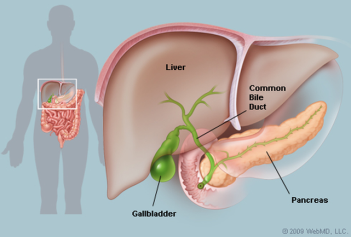
 I’ve said it before, and I’ll say it again–I don’t enjoy reading. However, I try to always be reading at least one book at any given time. I do like to learn, and therefore, I feel reading is important. It expands my mental horizons. And I do come across some good, or even great, books. It just remains a fact that I don’t enjoy it overall. I’d rather be watching TV or a movie. There are these little gems, though, that really stick out in my literature landscape. And, even if for a brief moment, I do derive great pleasure from the words.
